Tuesday, February 23, 2010

When You Reach Me by Rebecca Stead

I am not ashamed to admit that I'm an awards hound. Give me a list of books that have either been shortlisted for or won an award, and I'll immediately go online and request copies from my local library. I am, however, ashamed to admit that I waited until Rebecca Stead's When You Reach Me won the Newbery Medal to check it out even after Betsy Bird said way back in April, " ...this book is, pretty much, one of the best children's books I have ever read."

After FINALLY reading it, I have to agree with Ms. Bird and so many others around the blogosphere who love this book.

It's the late 70's, and sixth-grader Miranda spends much of her time helping her mother practice for The 25,000 Pyramid game show. Her best friend, Sal, has suddenly stopped talking to her, and to make her "normal" life even more complicated, she's started receiving mysterious messages that not only seem to predict the future but convince her that she must help prevent the deaths of her friend and the letter writer. But who are the letters coming from and can Miranda do what is asked of her?

To wrap this book up in a neat little bow is difficult because there is so much going on. Not only is it a mystery, but it's a coming of age novel where Miranda is forced to make new friends and step outside of her comfort zone for the first time in her life. It's not until the very end that you realize what exactly is going on, and you're tempted to read the book over again to look for the clues that are scattered throughout.

What is most impressive is that Rebecca Stead is able to weave the complex storyline together in a fairly short novel with beautifully-written prose. Miranda is a truly believable character who many kids will identify with. And the references to A Wrinkle in Time, the book Miranda has read over and over again, were delightful. Those familiar with A Wrinkle in Time will have fun finding the similarities between the book and what is going on in Miranda's life.

This is a book, I'd give to any tween who likes both realistic fiction and a bit of sci-fi and mystery. For the perfect gift for a young book lover, pair When You Reach Me with A Wrinkle in Time. 

Reading level: 9-12 | Publisher: Wendy Lamb Books (2009) | ISBN: 978-0385737425 | Source: Purchased e-book

The Amazon.com links in this post are affiliate links. With every purchase you make through clicking on these links, you are helping support The Well-Read Child.

RNFD4Q2J2GVB

Wednesday, February 10, 2010

North of Beautiful by Justina Chen Headley

Terra Cooper was born with a port wine stain that covers one cheek and has dealt with numerous surgeries and treatments to try to at least make it fade a bit her entire life. She's also dealt with numerous taunts from her peers and has resorted to wearing thick pancake makeup to cover it. Her verbally abusive and degrading father has managed to destroy anything that was left of her self-esteem. She doesn't think she's good enough to have a boyfriend that truly cares for her, so she settles for a self-absorbed jock who only really cares about his muscles. Then one day, by chance, Terra meets Jacob, somewhat of an outsider himself, and through him, she is finally able to accept herself and learn to heal.

To sum up this book in a short paragraph is so hard to do.  North of Beautiful is more than just about self-acceptance. It's a book about growth, healing, family, and self-discovery. Justina Chen Headley has done an amazing job with creating characters you love and characters you hate, but above all, creating characters who are real. Through Terra's journey, the reader is forced to think about what true beauty is and the power of thinking positively about yourself. Terra turns from someone who hides her true self into a courageous young woman who learns to love herself and accept who she is, flaws and all.

North of Beautiful is a beautifully-written and inspiring book that will appeal to many teens. I highly recommend it.

Reading Level: Young Adult | ISBN: 978-0316025065 | Publisher: Little, Brown Books for Young Readers | Source: Purchased copy


The Amazon.com links in this post are affiliate links. With every purchase you make through clicking on these links, you are helping support The Well-Read Child.


Saturday, February 6, 2010

Review Policy

Updated:09/04/2012


What types of books do you review?
I review books for children and young adults, an am especially interested in:
  • High-interest nonfiction for kids of all ages
  • Books, both fiction and nonfiction, featuring multicultural characters
  • Books geared specifically toward toddlers and babies 
  • Dystopian fiction, science-fiction, paranormal fiction for middle grade or young adults
  • Realistic/issue-based young adult fiction
I also review educational books and workbooks. 
    If you have a book that fits within these categories, please e-mail me at thewellreadchild AT gmail DOT com.


    Do you review PDFs or e-books?
    I will accept e-books of Middle Grade and Young Adult books that are compatible with a Kindle e-reader. I do not accept e-book versions of picture books. Part of the magic of reading is being able to flip through books and devour the material, especially if it's a book with illustrations.

    Do you review self-published books? 
    I accept self-published books for review on a case-by-case basis. If you have a self-published children's book, please e-mail me with a detailed description of your book and why you'd like me to consider it for review.  

    Can you guarantee a review?
    No. Acceptance of a book does not guarantee a review. Sometimes I choose not to review a book because it does not fit within The Well-Read Child's mission. I only spend time reviewing books that I feel children, young adults, and adults will find appealing or books about which I have something to say. I'm always honest in my reviews, so you may expect to see negative reviews from time to time.

    Do you review book aps? 
    Yes! I will review book aps that are downloadable on an iPhone or iPod touch. 

    Questions? 
    E-mail me at thewellreadchild AT gmail DOT com.


    Tuesday, January 12, 2010

    Andy and Sam: Hide-and-Seek by Liesbet Slegers


    First published in the Netherlands in 2009, Andy and Sam: Hide-and-Seek is a super cute interactive book featuring a little boy named Andy and his "sometimes naughty" orange cat, Sam.

    Composed of two-page spreads featuring different locations like Andy's bedroom and backyard and the zoo, readers are asked if they can find Sam who is always hiding somewhere. Once they find Sam, the book asks them to find other animals and objects in the spread. While there is no real story line, this book is a great way to introduce toddlers and preschoolers to new vocabulary words and to sharpen their visual skills and question/answer skills. 

    My almost three-year-old can't get enough of the book and truly enjoys trying to find Sam. Sometimes you can only see his tail poking out from a hiding place, and other times, he's out in open but doing something funny like riding a polar bear's back at the zoo. Each time we read it, it seems like we discover something new in each spread.

    Using this book is a great way to get your child to interact with books and a fun way to teach them new concepts.

    Reading Level: Baby-Preschool | ISBN: 978-1-935279-35-8 | Publisher:  Kane/Miller, January 2010 | Source: Review copy from publisher

    The Amazon.com links in this post are affiliate links. With every purchase you make through clicking on these links, you are helping support The Well-Read Child. All proceeds are used to buy brand new books for a local women and children's shelter.  


    Wednesday, December 23, 2009

    Madame Poulet and Monsieur Roach by Dianne de Las Casas, illustrated by Marita Gentry


    Growing up in the rich storytelling country of the Appalachians, I latched on to stories and folktales when I was very young. There's something quite magical about listening to someone tell you a story, and I especially love to hear retellings of old classics I heard when I was a child. That's why when Pelican Publishing sent a copy of Dianne de Las Casas's The Cajun Cornbread Boy, a retelling of the Gingerbread Boy, it became a fast favorite in our house. In fact, my daughter asks me to read it to her often and even makes me chase her while she says, "Run, run as fast as you can. You can't catch me. I'm full of cayenne."

    So, when Pelican sent a copy of Dianne de Las Casas's newest book, Madame Poulet and Monsieur Roach, we were eager to crack it open. Set in New Orleans back in the day when chickens and roaches were friends, Madame Poulet (a chicken) and Monsieur Roach (a roach of course) were best friends. They live together and are supposed to forage for food together, but lazy Monsieur Roach decides to pretend to be sick and invites all of his roach friends over for a marvelous fête while Madame Poulet is out looking for food. When Madame Poulet catches on, she gets a bit of revenge, and it's the end of friendships between chickens and roaches forever.

    This is the kind of story that is meant to be read and acted out loud. You absolutely have to sing the song that the roaches sing while Madame Poulet is out (set to the tune of "La Cucharacha"). While the story is mostly set inside the New Orleans house of Madame Poulet and Monsieur Roach, Marita Gentry's illustrations give you colorful glimpses of New Orleans as Madame Poulet goes about her day foraging for food. With words and phrases like fête, madame, monsieur, and "Laissez les bons temps roule!" seamlessly sprinkled throughout, you get a sense of the city's Cajun culture. A glossary in the back defines all of the French words that are in the book.

    This is the type of story you can really have fun with. Kids will laugh, especially at the stomach-turning ending.

    Reading Level: Ages 4-8 | Publisher: Pelican Publishing (September 8, 2009) |
    ISBN-13: 978-1589806863 | Source: Review copy from publisher


    The Amazon.com links in this post are affiliate links. With every purchase you make through clicking on these links, you are helping support The Well-Read Child. All proceeds are used to buy brand new books for a local women and children's shelter.


    Wednesday, December 16, 2009

    Before Columbus: The Americas of 1491 by Charles C. Mann


    "In Fourteen-Hundred Ninety Two, Columbus sailed the ocean blue." And he found a "new world" and "new people." But was this world and its people really new? Of course not! And chances are that unless your history books in school were written by anthropologists, you most likely were taught incorrect or incomplete information about the Americas before Columbus arrived. In fact, that may have been glossed over completely, and Columbus's "discovery" of America may have been the starting point of American history for you.

    In Before Columbus: The Americas of 1491, Charles C. Mann sets the record straight with a compelling look at the peoples of ancient America. Based on findings presented his book 1491: New Revelations of the Americas Before Columbus, Before Columbus answers three questions:
    • How old was the "New World?"
    • Why did Europe succeed?
    • Were the Americas really a wilderness?
    In answering these questions, readers are taken on amazing journey and learn some surprising facts. Stunning photographs, paintings, maps, and call-out boxes supplement the narrative and bring Native Americans and their stories to life.

    This would make a perfect addition to a history class or home library. Highly recommended.


    ISBN: 978-1416949008 | Reading Level: Young Adult | Publisher: Atheneum, 2009 |
    Source: Cybils review copy from publisher


    This book was nominated for a Cybils awards in the YA/MG Nonfiction category.


    The Amazon.com links in this post are affiliate links. With every purchase you make through clicking on these links, you are helping support The Well-Read Child. All proceeds are used to buy brand new books for a local women and children's shelter.


    Tuesday, November 24, 2009

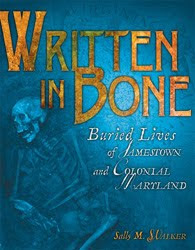
    Written in Bone: Buried Lives of Jamestown and Colonial Maryland by Sally M. Walker


    Holding a lifelong infatuation with archeology, I'm always watching shows or reading books about digs and discoveries. The quality of writing varies among the different books and programs. Sometimes it's way too technical. Other times it's boring and just presents fact after fact.

    When Sally M. Walker's Written in Bone: Buried Lives of Jamestown and Colonial Maryland was nominated for a Cybils award, I was eager to check it out, and I was delighted to see that it was well-written, engaging, and full of interesting information.

    Written In Bone takes readers along the journey as scientists uncover skeletons and other artifacts from Colonial Jamestown, VA and Colonial Maryland. What makes this book exceptional are the stories it tells along the way. Not only do we learn more about the actual skeletons that were uncovered, but we learn about the way of life that was often brutal and even deadly during this period. For example, indentured servants were often abused as the bones of a young boy found hastily buried in a cellar revealed. Babies were often swaddled so much that they didn't receive important vitamins from sunlight and died in early infancy as revealed from the bones of an infant discovered in a lead coffin under a Maryland church.

    The book takes readers through the excavation of the different skeletons and the process involved in determining key information about who they were, where they lived, and how they died. It never gets too technical and makes for a fascinating read.

    If you get a chance to visit the DC area, a visit to the American Museum of Natural History to "meet" some of the skeletons and artifacts featured in the book. I got a chance to see it before I read the book and was pleasantly surprised to read more about some of them.

    I highly recommend this book and think it may even inspire some readers to explore careers in forensic anthropology.

    ISBN: 978-0-8225-7135-3 | Carolrhoda Books, 2009 | Source: Review Copy from Publisher


    Thursday, November 12, 2009

    What My Children Are Reading 11/12/09

     Head on over to Chronicle of an Infant Bibliophile to leave your links and comments for this week's What My Children Are Reading.


    Also, I've decided to take a brief hiatus from blogging as I prepare for the holidays, read Cybils nominees, and get ready for a new baby. I'll be on sporadically to talk about the Cybils and other Kid Lit news. Cheers!


    Thursday, November 5, 2009

    What My Children Are Reading, November 5, 2009

    I'm catching up on Cybils reading and hope to have new reviews to you soon. In the meantime, be sure to stop by Mouse Grows, Mouse Learns and let everyone know what your kids are reading this week!


    Thursday, October 29, 2009

    What My Children Are Reading, October 29, 2009

    This week's reading has been severely limited due to the flu, but please be sure to visit Amy at The Art of Irreverence who is hosting this week's round up.


    Tuesday, October 27, 2009

    Re-Post: Nonfiction Evaulation Criteria

    I posted this last year around this time when I was serving as a panelist on the Cybils Middle Grade/Young Adult Nonfiction Panel. Since I'm on the panel again this year, I thought I'd post it again to serve as a reminder for what I'm looking for when evaluating the nearly 50 books that have been nominated in this genre. 


    Originally posted 11/13/2008


    Age-appropriateness
    Middle graders and young adults span from approximately age 9 to 14+. That's quite a wide age range, so as I'm reading, I'm asking myself if the subject matter as well as the language, visual elements, organization, and tone seem appropriate for the book's intended age. As a former middle school and high school teacher, I know that kids in this age group do not want to be treated like little children or feel as if they're being talked down to. Likewise, they don't like to read books with childish illustrations or large "baby" fonts. On the other side of the spectrum, I pay attention to whether or not the same elements may be more appropriate for older audiences.


    Layout
    Layout is important when it comes to evaluating a book. A pet peeve of mine in nonfiction is when a sentence or paragraph carries over onto the next page, and you have to flip back to read an interesting text box, time line, or photo caption. If I have to turn a page so that I can finish reading a sentence and then have to flip back to read something else, I get annoyed, and I can imagine that kids may NOT flip back and miss interesting information. I know that this is sometimes out of the author's control and that it has to do with printing issues, but to me, good layout and content go hand in hand. What use is good content if it's missed or forgotten because it's poorly organized?

    On a similar note, I also look at how information is organized and chunked. Are section headings easy to find? Is the information organized so that it follows a logical flow and is appealing to the eye or do readers have to wade through lots of text or read tons of information and elements that are crowded onto the pages.

    To me, readability is just as important as engaging text.


    Writing Style/Tone
    As I mentioned above, kids don't want to be talked down to, but at the same time, they don't want to read dull, dry text. As I'm reading the books, I take a close look at the writing style and tone and try to get a grasp on whether it's engaging and conversational. Does it draw readers in by asking questions or presenting problems that need to be solved? If it's a biography, does the author present the subject matter in a way that makes the person(s) appealing to readers? Can they relate to them? Are readers inspired to keep turning the page?


    Appealing Story
    Even though it's nonfiction, the book should still tell a story or stories that interest kids and keeps them from putting the book down. The story could be about Abraham Lincoln's assassination, a historian's quest to discover information about a legendary figure, or the story behind the formation of a new solar system. To me, excellent nonfiction doesn't just present straight facts. I can get that kind of information in an encyclopedia. Instead, excellent nonfiction draws me into a story about something or someone, inspires me to ask questions and want to discover the answers, and makes me CARE about the subject matter.


    Visual Elements

    I finally look at the visual elements in a book to help me distinguish the good from the great. Granted, some genres like biography or autobiography don't necessarily require a lot of photos or illustrations, but they certainly don't hurt. Or do they? Going back to age-appropriateness, visual elements CAN hurt a book's quality if they are too immature or even too mature for the intended audience. If I pick up a book about The Civil War that's written for a middle grade audience, I don't expect to see gory pictures of corpses strewn about a battle field. But I DO expect to see pictures of important people from this time period and perhaps some weapons or other relics.

    I tend to prefer nonfiction where the visual elements are integral parts of the book instead of supplementary elements. By that I mean, does the book merely include a drawing of a chapter's subject matter at the beginning of the chapter or are illustrations, photographs, maps, timelines, etc. scattered throughout? Are they colorful, crisp, easy to distinguish, and eye-catching? Do they have captions if appropriate? Can a reluctant reader pick the book up and be engaged without having to read all of the text? That's important to me.


    References
    Does the book have a list of references at the end, an index, glossary, or a sources consulted section? Not only do references give you a place to go for more information, but it shows you where the author got his/her information. Moreover, it adds credibility to the content especially when the book has been reviewed by an expert(s) in the field of the book's subject matter.

    Conclusion
    These criteria are really helping me focus on the different elements of the nominated books I've been reading and is helping me distinguish the good from the great. Anything I'm missing here?



    Monday, October 26, 2009

    Chasing Lincoln's Killer by James L. Swanson


    When John Wilkes Booth learned that Abraham Lincoln would be attending a play at Ford's Theatre on April 14, 1865, a theater Booth had virtually unlimited access to, he couldn't believe his luck. It was finally his chance to kill the president he abhorred, but he only had a few hours to make plans. And boy did he hatch a plan that also included the murder of Vice President Johnson and Secretary of State Seward. He quickly got his co-conspirators in position, planned his escape, and waited for the perfect moment to kill the president, a task he unfortunately completed.

     It's highly probable that most Americans know that John Wilkes Booth assassinated Abraham Lincoln at Ford's Theatre on April 14, 1865, but many don't know about the 12-day hunt for Booth through the Maryland and Virginia countrysides. James L. Swanson's Chasing Lincoln's Killer describes the events leading up to and after the assassination and greatly details his escape and eventual capture and death. Readers learn about the Confederate sympathizers who provided weapons, food, and shelter to Booth and his co-conspirator, David Herold, along the way; they learn about the investigation that led up to his capture; and they learn about the trials of the co-conspirators.

    Chasing Lincoln's Killer is what great nonfiction should be. It reads like a heart-pounding story with enough detail to give you an intimate picture of Booth, but it doesn't overwhelm you with facts and details that make a lot of nonfiction difficult to navigate. Photographs sprinkled throughout offer visuals of the main "characters" in the book and take you back to 1865. You almost forget that this really happened and that you're not reading a novel.

    Highly recommended. 

    This book is the YA adaptation of Swanson's Manhunt: The 12-Day Chase for Lincoln's Killer, and I'm eager to read it for even more detail.


    Chasing Lincoln's Killer is a Cybils nominee in the MG/YA Nonfiction category.

    ISBN:  978-0439903547  | Publisher/Publication Date:  Scholastic (February 2009)  |   Source: Copy from public library


    Nonfiction Monday is hosted at Wrapped in Foil today.


    Thursday, October 22, 2009

    What My Children Are Reading, October 22, 2009

    This week, we've been digging into some "older" books.


    Where the Wild Things Are by Maurice Sendak. Her daycare provider actually read this to her last week, and all I heard about on the way home was "Max this," and "Max that," and "Dancing with Wild Things and a 'Wumpus'." So, we've had to dig out our personal copy on the shelf and read it every single night. Honestly, it's hard to find a more perfectly-executed children's book, so it's been a joy reading it to her. We won't go see the movie because I think it may be a little too scary for her, but I think she'll enjoy it when she's a little older. 
    (Source of book: Purchased personal copy)


    The House in the Night by Susan Marie Swanson, illustrated by Beth Krommes. I'm only putting this book in the "older" category because we've had a copy since it was published in 2008, and we've read it numerous times. If you haven't checked out Caldecott Medal book, you're missing on on a real treat. The beautiful black and gold scratchboard illustrations perfectly complement the simple story. Here's a full review I wrote in June 2008.

    (Source of book: Review copy from publisher)


    What are your children reading this week?  Rebecca at Rebecca Reads is hosting this week's round-up, so stop by and let her know!


    Wednesday, October 21, 2009

    Once Was Lost by Sara Zarr


    Sara Zarr's latest young adult novel, Once Was Lost is a beautifully-written account of a teen girl's life-changing summer. Samara, called "Sam" by everyone, is the daughter of a small-town minister. The book begins almost a month after her alcoholic mother was sent to rehab after a DUI incident. Not only is Sam struggling with her mother's absence, but the family's finances will probably not allow her to return to her private high school at summer's end. On top of that, her father seems to be dealing with his wife's absence through denial...he doesn't talk to Sam about it at all and chooses to spend most of his time working at the church or helping other families with their problems. When a young girl from the church mysteriously disappears, the community is sent into upheaval, and Sam truly begins to question the faith and beliefs she's held close her entire life.

    To say Once Was Lost is about faith or alcoholism or Sam's "coming-of-age" or a young girl's kidnapping is just too simple because Sara Zarr's writing and story weaving is just too complex for that. It's about all of those things and more, but it's not an "issues" book. It's more about a girl's struggle with and acceptance of identity, and all of the other stories and incidents contribute to her journey. If you've read Zarr's other two novels, Sweethearts, and Story of a Girl, you're familiar with her exceptional ability to not only tell a gripping and compelling story but to really get inside the heads of the main characters and make them real. It was the same with Once Was Lost. From the get-go, you really care about Sam. She's a REAL teen who is struggling with some REAL issues. You can feel the sadness, anxiety, and suspicion grow amongst the residents of the town as each day passes with no sign from the missing girl, Jody. You can feel Sam's pain as she tries to deal with her mother's absence and her father's denial, and you can feel her uncertainty and "cautious optimism" when a boy seems to like her. As with her other books, you really don't know how it's going to turn out until the very end, and even then, the future for the main characters is wide open.

    Sara Zarr has fast become one of my favorite authors of realistic fiction. Once Was Lost comes with my highest recommendation.


    Reading Level: Young Adult | ISBN: 978-0316036047 | Little, Brown Books for Young Readers, October 2009 | Source: Purchased Kindle E-Book Version


    Thursday, October 15, 2009

    What My Children Are Reading, October 15, 2009 edition

     Brimful Curiosities is hosting this week's What My Children Are Reading. Head on over to submit your link and to see what everyone's reading!


    Wednesday, October 14, 2009

    The National Book Award Finalists


    The National Book Foundation announced the finalists for the 2009 National Book Awards today. Here are the finalists in the Young People's Literature category:


    Deborah Heiligman, Charles and Emma: The Darwins’ Leap of Faith
    Phillip Hoose, Claudette Colvin: Twice Toward Justice
    David Small, Stitches
    Laini Taylor, Lips Touch: Three Times
    Rita Williams-Garcia, Jumped

    Congratulations to all of the nominees!

    I'm excited that two finalists: Charles and Emma: The Darwins' Leap of Faith and Claudette Colvin: Twice Toward Justice are nominees in the Cybils Nonfiction MG/YA Category, the category in which I'm serving as a Round 1 panelist. By the way, tomorrow (October 15) is the last day in which you can submit nominations, so head on over to the Cybils site and nominate your favorite books ASAP if you haven't already!

    For more information about the nominated books and to see the nominees in other categories, visit National Book Foundation.

    Betsy-Tacy by Maud Hart Lovelace


    If you've been browsing children's literature blogs and other book blogs, you've probably noticed a lot of recent posts about Betsy-Tacy, the classic series by Maud Hart Lovelace. That's because the series has been reissued and Betsy and Tacy have been on tour.

    I'm excited to be taking part in the tour because I enjoyed the books when I was a child, and it was quite a treat to be reintroduced to the characters and the small town Deep Valley, Minnesota. Even though Maud Hart Lovelace began writing the books in the 1930's, children will identify with the friends Betsy, Tacy, and Tib as they deal with real-life issues.

    In the books, we see the characters grow up from the time they are five through high school to the time of Betsy's wedding. For this blog tour, I am focusing on books three and four: Betsy and Tacy Go Over the Big Hill and Betsy and Tacy Go Downtown. The girls are getting older (10 in book three), and wheras the first two books featured vignettes of sorts of Betsy, Tacy, and Tib, books three and four have more of a plot as the girls begin to venture out of the comfort of their homes.

    In Betsy and Tacy Go Over the Big Hill, the girls go to "Little Syria," a community of Lebanese immigrants. It's here that the girls make new friends and develop an appreciation for what it means to be American and have freedoms like the freedom of religion. But interwoven among this theme are lighthearted episodes that will certainly appeal to children and keep them reading. For example, they fall in love with the King of Spain and have an argument with Betsy and Tacy's big sisters about who will be the Queen of Summer.

    In Betsy and Tacy Go Downtown, the girls are now twelve, grown-up enough to have even more adventures. This book is a book of "firsts" for the girls. They go the theatre for the first time, ride in a car for the first time, and discover how wonders of the new Carnegie Library. This really struck home with me because the library was one of my favorite places when I was a child. I also identified with this book growing up because the girls befriend the new kid in town. I moved to a new town and school when I was 10. This is a great book as the girls transition into young adulthood.

    Maud Hart Lovelace's work with setting and characterization is outstanding. You grow to love the characters and their hometown. As I was reading, I felt as if I lived in Deep Valley, even though I've never even been to Minnesota. I would not hesitate to give these books to children who love realistic fiction.


    Check out the other tour stops this week!
    Monday, October 12th: Red Lady’s Reading Room
    Tuesday, October 13th: A High and Hidden Place
    Wednesday, October 14th: The Well-Read Child (here!!!)
    Thursday, October 15th: Diary of an Eccentric


    Betsy-Tacy Book Relaunch Parties are happening across the country. Is one coming to your area?

    10/23: Bainbridge Island, WA at the Library (This date is still a bit tentative.)

    11/7: Highland Village, TX Barnes and Noble

    11/8: St. Paul, MN Red Balloon Bookshop 

    4/17/10: Dallas, TX, Dallas Heritage Village 


    Thanks to TLC Book Tours for setting up the tour and Harper Collins for providing review copies of the books.


    Monday, October 12, 2009

    Winter's Tail Prize Pack Winner


    Thank you to everyone who entered the Winter's Tail contest! Unfortunately, I could only offer the following prize pack to one winner:

    • Dolphin Plush
    • Dolphin Key Chain
    • Winter’s Tail game for Nintendo DS
    • Copy of Winter’s Tail: How One Little Dolphin Learned to Swim Again Book 
     Using random.org to randomly draw a number, Megan is the winner!
    Congratulations!!! I will e-mail you for your address!


    Thursday, October 8, 2009

    What My Children Are Reading (October 8, 2009)

    We've been a little "off" this week with reading. My daughter has been much more interested in playing with some new puzzles and doing crafts on her new craft table than reading. We have managed to sneak in a few books though.

    Here's what she's enjoyed the most:


    The Very Hungry Caterpillar by Eric Carle
    It's weird how this book sits on the shelf for weeks at time, and then suddenly, my daughter will pick it up and beg to have it read to her over and over again. I've read this to her since she was a tiny baby, so she knows most of the words by heart.

    She asked me this week if we could go to the store and buy everything the caterpillar eats in the book. That would be fun, but I'd have to figure out how to make meals out of such a wide array of food. Sausage cupcakes?


    The Construction Alphabet Book by Jerry Pallotta
     We picked this up at the library because my daughter is fascinated by construction sites and big machines. The text is a little too complex, but she's fascinated at all of the illustrations. I certainly learned a lot by reading this book! I certainly never knew all of the terms for all of those "machine-thingys."


    So, what are your children reading this week?
    Tanya Dennis at  In the Dailies is hosting today, so be sure to stop by and leave your link!


    Monday, October 5, 2009

    Earth and Sky by Pascale Hédelin, illustrated by Laurent Richard


    Happy Nonfiction Monday! It's been quite a while since I've done a Nonfiction Monday post because I haven't had a lot of time to scour the library for good finds. Thankfully, I've recently received some great selections in the mail, and as a panelist in the Cybils MG/YA Nonfiction category, I hope to be bringing you some great selections for middle graders and teens very soon. By the way, if you haven't nominated your favorite titles, do stop by the Cybils website by October 15 and do so.


    Earth and Sky by Pascale Hédelin, illustrated by Laurent Richard arrived in the mail from Owlkids just this week, and it provides a wonderful and interactive introduction to the Earth and our solar system. With basic information about everything from erosion to volcanos to constellations to the International Space Station, Earth and Sky presents digestible chunks of information perfect for curious learners.

    What makes the book unique and what will appeal to young learners are the interactive elements on nearly every spread. You can lift flaps, pull tabs, and even move the Earth around the sun to learn more about the featured topics. A page about the moon features a large illustration of the moon with indentations, allowing readers to feel the moon's craters, seas, and plains.

     Pascale Hédelin did a great job of choosing just the right amount of interesting information to present, and Laurent Richard's illustrations provide an engaging and fun reading experience. This would make a great supplement to a home, classroom, or homeschool library.

    ISBN: 978-1897349687 | Owlkids, September 2008 | Age Range: 5+ | Source: Review copy from publisher

    Visit Moms Inspire Learning for more great nonfiction selections!