Thursday, May 28, 2009

Joan Of Arc: Warrior Saint of France by Paul B. Thompson


Reviewed by Sheila Jones (Greenridge Chronicles)

“Compiègne was under siege, outside the city’s walls, soldiers of the duchy of Burgundy kept close watch, making sure no supplies or reinforcements entered the French town. It was May 24, 1430, the ninety-third year of the Hundred Years War between England and France.”


And so begins Paul Thompson’s Joan of Arc: Warrior Saint of France. At first glance this is a very impressive book: tough, reinforced binding, gorgeously detailed pages, and glorious colours everywhere. And the second glance doesn’t disappoint either: the pages have been printed to look like an ancient manuscript, with catchy chapter headings (“Trust Not In Princes” “Trial And Errors” “Consigned To Flame”), colourful maps, artistic detailing, and picture after beautiful picture featuring France’s national heroine, la Pucelle.

Enslow Publishers, a K-12 library publishing company, feature this title in their very intriguing Biography section, where I noted that it was part of a series called Rulers of the Middle Ages (the other titles in the series being: Charlemagne, Richard the Lionheart, Ghengis Khan, William the Conqueror, and Saladin). And Paul Thompson has written this book with an eye to a high school audience. The details of Joan’s life are all here, from her humble beginnings, to her remarkable visions (and conversations with dead saints) and formidable skill at marshalling the people of France, to her eventual death by burning at the hands of the English, after a lengthy and distressingly unjust trial. But he doesn’t stop there – two chapters finish off Joan’s story: one detailing the efforts of her family to clear her name (and change the results of her trial) and the other traces her journey to eventual sainthood.

Basing the events of his narrative on the studies of several distinguished academic authors, Thompson presents an account of her life and death as it occurred within the tumult of war and nation-building in fifteenth century Europe. Why I say with an eye to a high-school audience is because his historical account glosses over some of the more, err, sordid aspects in the history of the French and English monarchy. There is just enough detail but nothing overly gratuitous, for which I have to say I was thankful; this is not a story with a happy ending. In addition, Thompson includes many historical details on everything from French laws to the history of the longbow to the process of canonization, not to mention a pretty thorough glossary and timeline. I did wonder at his dismissal of Saints Catherine and Margaret, not to mention his reasons for this dismissal, but that’s just a small quibble, and one easily ignored. This book has lots of information for someone writing a student paper, there’s no doubt about that. Plus, it’s so beautiful in appearance that it can’t help but capture its audience. It’s a fascinating biography of a peculiarly enigmatic figure in the history books; I found myself unable to put it down and ended up finishing it in one evening. I highly recommend it.

ISBN: 978-0766027169 | Enslow Publishers 2007 | Buy from an independent bookstore | Buy from Amazon


What My Children Are Reading Meme


Thanks to Sandy at Stories Are Light for giving me the idea to create this weekly feature. Want to share what your kids are reading or get ideas from other bloggers for other books to read with your children?

Create your own post on your blog, and then come to The Well-Read Child every Thursday to submit your link via Mr. Linky. You can call your post whatever you'd like as long as it relates to kids reading. For example, mine will be "What My Daughter is Reading." You can write your post anytime during the week, but the roundup will be hosted here each Thursday.

This is not exclusive to parents. Grandparents, teachers, librarians, aunts, uncles, etc., please join in. Tell me what your grandkids are reading, what your third-graders are reading, what you're reading at storytimes, etc. If your kids are older, and you don't read together that often anymore, you can share some of the favorite books they're currently reading on their own. The idea is to get the community of people who are passionate about reading with children together to share their book recommendations, experiences, and memories.

Your posts can be a list of books you're reading with your kids, books your kids are reading on their own, old favorites that get picked up again and again, summaries of your favorite books you love to read together, books you just started reading with your kids, etc.

Thanks for participating and for helping instill the joy of reading in the children in your life!


Wednesday, May 27, 2009

What My Daughter's Reading May 2009 Edition

I haven't done an installment of "What My Daughter's Reading" for quite a while, so I thought I'd let you know what we're enjoying reading together.


First and foremost, Good Night, Gorilla by Peggy Rathman has been a favorite for quite a while, and not a night goes by where my daughter doesn't ask me to read it. Now she knows it so well, that she reads it herself. She knows all of the animals by name and insists that the hyena is a dog, and she gets a kick out of reading "Good Night" in the thought bubbles. At two, she feels very proud of herself that she's able to "read," and she "read" the book cover-to-cover to her grandmother this evening.


Then we have Caillou. We don't watch a lot of TV, but when we do, Caillou is always a favorite. My daughter about flipped out when we received a box of Caillou books from Raab Associates. I'm generally not a fan of books that feature TV characters, but I can't deny the draw these books have on my little one, and hey, if these are the books that can get a kid interested in reading, then the more power to them. Our box included an impressive set of books designed just for little kids. She particularly likes, Caillou: My First Vacation, a lift-the-flap book that tells the story about Caillou's vacation. Caillou: Where Is Teddy? tells the story of when Caillou loses his Teddy after a visit to his Grandma's house, and then there's a five-book boxed set featuring stories about Caillou's everyday adventures. In one book, he makes a snowman with his friend. In another, he gets a little naughty and puts makeup on his sister's doll's face. These are well-worth checking out if you have a Caillou fan in your house.


Finally, a new favorite is Davide Cali's I Love Chocolate (Tundra Books, 2009). In the book, a very happy little boy tells why he loves chocolate and all of its different forms. He loves chocolate bars because they crunch between his teeth. He loves chocolate that's full of surprises in the middle, and he loves chocolate because it makes everything better. Evelyn Daviddi's illustrations are funny and chocolaty and always make me crave chocolate truffles. I guess I don't have to tell you why my daughter and I love this book. Who doesn't love chocolate? I actually have a friend who doesn't, but I think she's really an alien.


Those are just a few of the books that we are reading in our house. What are you reading with your kids?


Saturday, May 23, 2009

Here a Pig, There a Pig

I'll be the first to tell you that there is no greater pig than Wilbur of Charlotte's Web. However, if you or your little one needs a pig fix, check out these great new books featuring glorious swine.


Buy at an independent bookstore
Pig-A-Boo: A Farmyard Peekaboo Book by Dorothea DePrisco, illustrated by Treesha Runnells

For your youngest child, this colorful new board book encourages children to lift flaps and touch textured patches on different farm animals. On the left of each two-page spread is a riddle such as, "I went to the farm, and what did I see?" A pink pig is sprawled across the spread, covering its eyes with its hooves. Children lift the fold-out flap on the right and see the pig with its eyes uncovered rolling in the mud. The text says, "Oink-a-boo! A big chubby pig looking at me!" A soft textured cut-out is on the pig's chest.

The book goes through a number of farmyard animals - horse, chicken, sheep, and cow - using the same format. This is a great choice for babies and toddlers who love to play peek-a-boo.

Little Simon | May 2009 | Source: Library | Buy at an independent bookstore | Buy from Amazon


Shop Indie Bookstores

Being a Pig is Nice: A Child's-Eye View of Manners by Sally Lloyd-Jones, illustrated by Dan Krall

"When you're a kid it's not good because your mom is always telling you, 'Remember to be polite! And when you go to other people's houses take your manners with you, please. Thank you.'"

So begins this super cute book featuring a little girl who imagines what it would be like to be different types of creatures whose good manners are considered bad manners to humans. For example, it's very rude to be clean when you're a pig. If you're not muddy, then you get in trouble. Or when you're an owl, being quiet at night is completely inexcusable. But my favorite part is when the little girl imagines being a monster where "you can do anything you want (as long as it's Bad and Naughty and Awful and Monstrous)."

This book is a perfect combination of funny text and hilarious illustrations that would make an excellent read aloud. Kids will definitely laugh out loud and ask for it to be read again and again.

Schwartz & Wade | May 2009 | Source: Review copy from publisher |
Buy at an independent bookstore | Buy from Amazon


Shop Indie Bookstores
Princess Pig by Eileen Spinelli, illustrated by Tim Bowers

On a windy day, the sash blows off of the Pickle Princess during the Picawash County Farm Show Parade and lands on a sleeping pig at a nearby farm. When Pig wakes up, she's convinced that she's a princess and tries to convince the other animals who aren't so sure of her newfound royalty. When Goat tells her that princesses wear crowns, Pig makes a crown out of a teacup. When Rooster tells her she doesn't smell like a princess, Pig rolls in honeysuckle. Soon, all of the animals are convinced Pig is a princess and start taking orders from her. That is everyone except Pony, but who wants to listen to a naysayer? Soon Pig realizes that being a princess is kind of lonely and may want to reconsider Pony's wise words.

This is a truly adorable story that will appeal to many children. The illustrations are very cute, and kids will laugh at the different ways that Pig tries to convince others, including herself, that she's a princess. Highly recommended.


Knopf | June 2009 | Source: Review copy from publisher | Buy at an independent bookstore | Buy from Amazon


Wednesday, May 20, 2009

Fern Verdant and the Silver Rose by Diana Leszczynski


Here's another wonderful review from Tanya who blogs at books4yourkids.com. I hope you enjoy it! Tanya also posted a great interview with author Diana Leszcynski on her blog.

Fern Verdant & the Silver Rose by first time author Diana Leszczynski (subject of my first ever author interview) is one of those rare books that, thanks to an intriguing title and artwork by the amazingly talented and prolific Brandon Dorman, illustrator of one of my all-time favorite jackets for one of the best books written last year, Newbery Honor winner Savvy by Ingrid Law, jumps off the shelf and into your hands. Once it's there, thanks to Diana Leszczynski's wonderful writing, you just can't put it down.

As I read Fern Verdant & the Silver Rose bits and pieces reminded me of so many other wonderful books that I have loved. Like the main character of Savvy, Mississippi Beaumont, Fern is the recipient of a unique gift on her thirteenth birthday. The wickedly evil, child hating antagonists in the book reminded me of some of the best aspects of Lemony Snicket's Series of Unfortunate Events as well as al most everything by Roald Dahl. The Dickensian names (you can't beat "Fern Verdant' for it's internal rhyme, either) and occasional aside to parents (Joan Baez Middle School in Fern's new hometown of Nedlaw, Oregon, had me and my husband laughing out loud one night) are also reminiscent of Snicket and Dahl. And, the boatload of orphans with attitude, while definitely Snicket-like also called to mind the heroes of Trenton Lee Stewart's Mysterious Benedict Society and it's sequels. Whatever similarities there are to other works of young adult fiction, Diana Leszczynski's descriptively lush writing and ability to weave a suspenseful plot with rich characters makes Fern's story completely new and winning from start to finish.

The child of boatnists, Fern's father, Olivier Verdant, is an expert on ferns (thus her name) who originates from France and her mother, Lily Verdant, is a world renowned rescuer of endangered plant species. Because of her expertise, Lily travels often and Fern grows to resent this, wondering why her mother even bothered to have a kid if she wasn't going to be around much. Because of his discovery of a new species of fern, the family packs up and moves across the country to Nedlaw (thank you to my husband for pointing out to me that "Nedlaw" is "Walden" spelled backwards - another little inside joke for us adults...) so that Olivier can study this fern more thoroughly, separating Fern from her best friend, also a daughter of botanists, Ivy. Things go from bad to worse for Fern as her mother departs on yet another rescue mission right before her thirteenth birthday then disappears, seemingly washed out to sea as she tried to rescue the valuable and rare Silver Rose. Grandmamma Lisette arrives from Paris to help her son and granddaughter through this difficult time with her buttery homemade chocolate croissants and comforting hugs, but Fern stumbles into messy social situation at school that is only made worse by her birthday.

Things begin to change, if not necessarily improve for Fern when she finally turns thirteen and, through a series of funny mishaps, realizes that she can communicate with plants. She can hear their thoughts. She can hear the grass scream as she jumps on it. More importantly, she can talk to the plants and they to her, which is how she receives a long distance message from her mother that starts her on a journey that will end on the other side of the world. But, not without the interference of some pretty (comically) bad guys first. When her father sees her talking to the Weeping Willow tree in the yard, he and Grandmamma decide that Fern needs serious help and he puts her in NITPIC - the Nedlaw Institute for the Treatment and Prevention of Insanity in Children - under the care of the hypnosis-crazy Dr Marita Von Svenson. This is exactly where Henry Saagwalla, the evil, nature hating mastermind behind the disappearance of Lily Verdant wants Fern.

After Fern's stormy escape from NITPIC, aided by some enormous Douglas Fir trees lining the driveway, she sets off on an odyssey of sorts that reunites her with her fellow NITPIC inmate the orphan Francesca, her fourteen year old bother Anthony, captain of the Porpoise, and a handful of orphans who refuse to trust Fern because she has parents. The crew of the Porpoise is in possession of a Petal from the Silver Rose, hoping they can find the rose it came from and sell it for enough money remain independently at sea. Fortunately for Fern, she can communicate with the Petal, which comes in handy more than once. The climax of the book takes place on the extremely verdant island of Sri Lanka where Lily is being held captive, in a coma, and where the evil genius has a lair worthy of any James Bond baddie. Fern does her best to rescue her mother and the Silver Rose while at the same time keeping their powers secret for, as she learns early on, anyone in possession of the power to communicate with plants will lose that power if they tell another person about it. She experiences failure in one of these areas and is deeply saddened but responds to her failure and loss with a wonderful turn of maturity and compassion that makes you love her all the more.

Diana Leszczynski creates a brave. conflicted, determined character in Fern. I barely scratched the surface describing the the amazing opportunities that come Fern's way once she can communicate with plants. While reading Fern Verdant & the Silver Rose I began to look at the natural world around me a little bit differently as I walked my dogs every morning. There is one point in the book when Fern is scooped up by a Eucalyptus tree somewhere in Northern California. She spends a night and a day in the leafy arms of the tree (who happens to have an Australian accent) being cared for by it. Leszczynski's writing is so visual that I found I could see Fern and her tree home perfectly in my mind's eye. I never had a treehouse as a kid and always wanted one, I still do. I think that may have caused me to be especially entranced by this part of the book. Also, one of my favorite characters in Fern Verdant & the Silver Rose I have yet to mention is Andrew Wedgie, a devoted canvaser for Trees Pleese, an organization that tries to call attention to the plight of trees. Andrew makes the bad decision to ring the doorbell of Henry Saagwalla who kidnaps him and gives him serums that make him follow orders without question and gradually turn into a tree. Before Lily learns his name she calls him the Chia Man because his hair is green and growing like an alfalfa sprout afro. Is Andrew a good guy or a bad guy? A tree or a man?

This book could easily be marketed as an "Environmentally Friendly" "Green" book. In fact, Leszczynski describes, through Fern's eyes, Lily in this way; she "was beautiful, but she dressed with no regard for fashion. She wore shoes with heels that went down instead of up, and clothes that were baggy and bland. Lily had to know exactly how each person who made her clothes was treated in their place of work. How much were they paid? Were their working conditions safe and sanitary? Lily needed to know that they were treated fairly in order to buy their goods. Shopping with Lily was excruciatingly embarrassing for Fern." Leszczynski walks a fine line between poking fun at and presenting lifestyle choices, like being the family's vegetarianism, that are made out of respect for the earth and nature. The Verdant's are not kooky and they are not hippies but people with solid reasons for why they lead the lives they do. Of course Fern, who is at an age when most want to fit in instead of stand out in a crowd, will find Lily's choices aggravating at times. This book could have gone in such a different direction and been a dry, dogmatic primer on how to be earth friendly. Instead, it is full of adventure and humor and lush with descriptive details about the natural world that surrounds us. Hopefully through these descriptions readers will be enlightened to new ways of looking at and treating the world around them, just as Fern is educated and enlightened by her new found ability to talk to plants.

Fern Verdant & the Silver Rose will be coming out in paperback in May of 2010. Hopefully there will be a new Fern Verdant adventure hitting the shelves at the same time! I can't wait to read more and travel to new places with Fern - maybe even to the Tunisian garden where the teal Tulip is crying out for help?


Originally posted at books4yourkids.com on May 18, 2009.


Thursday, May 14, 2009

SLOB by Ellen Potter


When Tanya, a contributer at The Well-Read Child, and blogger at books4yourkids.com enthusiastically told me about how passionate she was about this book, I couldn't wait to share her review with you. I hope you enjoy it! Thanks Tanya!


Ellen Potter is the creator of my favorite clairvoyant sleuth, Olivia Kidney, who now has three books to her name. She has also written Pish Posh, which also involves some serious detective work on the part of main character Clara Frankofile. With SLOB we have the honor of meeting Owen Birnbaum, a narrator who is one point shy of having a genius IQ, which is what he tells people because his mother told him long ago to stop telling people what his actual IQ is. Owen is also 57% fatter than the average twelve-year-old boy and completely endearing, flaws and all. Owen's story is the kind that you want to relate from beginng to end to the closest warm body - like you feel after seeing a really great movie with someone other than your best friend or spouse. Fortunatley, I was able to to convince my husband, sixteen-year old daughter and eleven-year old son (who chooses not to read fiction, despite my cajoling and bribes) to read SLOB so that we could all talk about it together. It wasn't a hard sell, even to my son... Alas, there are some brilliant twists in this remarkable new book that I didn't see coming and I don't want to spoil them for anyone else. So, I'll try to stick to describing the true-to-life characters and spot-on details that Ellen Potter has woven into this bittersweet story without revealing too much, even though I am bursting to tell you everything.

Owen's voice is so real that I can't help but be reminded of other great literary and cinematic characters when I think of him. Owen reminds me a bit of the underachieveing and overweight Jack, one of the three main characters in Wendy Mass' poignant and astronomical book, Every Soul a Star. The rich, unique details that pepper SLOB also call to mind the quirks in another Wendy Mass book, Jeremy Fink and the Meaning of Life. However, despite my comparisons to the works of Wendy Mass, another favorite young adult author of mine writing fiction with a contemporary, realistic setting, Ellen Potter's story is entirely her own. Well, really it is Owen's story from start to finish.

It took the act of writing about books I have read and loved to help me to realize that as an adult reader of young adult fiction, I have a totally different set of qualities that appeal to me and this criteria is probably very different from that of a child reader. And, while I realize that it is mostly adults who are reading my reviews, I do always try to imagine what, say, the eleven-year-old me would have found appealing or boring about a book as well as the qualities that I, the adult reader find engaging. As an adult, I wanted to give Owen a big hug by the end of the book. He made me laugh out loud and cry and, while I would love it if one of my children had an IQ one point shy of genius, I would be especially honored if I was the parent of a child who overcame the hurdles and obstacles that were thrown at Owen with the courage and selflessness that he showed in the pages of SLOB. The eleven-year old me would have also laughed out loud at Owen and been drawn to the complete, three dimensional character that he is thanks to wholehearted, empathetic writing on Ellen Potter's part. There were times in the book when Owen's narrative voice reminded me so much of another (probably misguided on my part) adolescent hero of mine, Holden Caufield from JD Salinger's The Catcher in the Rye. And, while Owen is not self-destructive or deluded in the ways that Holden is, he is self-deprecating and innocent and genuinely cares about the welfare of those he loves. And, like Holden, Owen is a great, if not always reliable observer and describer of everyone and everything around him.

The bare bones plot of SLOB involve Owen's efforts to complete the construction of Nemesis, a satellite dish, a receiver, a television set and a mass of coils that he has been working on for a year and a half. As Owen says in his direct, perceptive and practical manner, "I'm not going to tell you what she will do once she's complete. You don't know me well enough yet. You probably think you do. Everyone thinks they know the fat kid. We're so obvious. Our embarrassing secret is out there for everyone to see, spilling over our belts, flapping under our chins, stretching the seams of our jeans." Owen also has to deal with Mr Wooly, a PE teacher who is "a few fries short of a Happy Meal" as well as someone who is stealing the three Oreos packed in an eco-container "which is made of recycled shower curtains (I'm not kidding, they really are made from shower curtains)" and stored inside his cloth lunch sack - his one indulgence in his otherwise healthy, low-fat diet. Finding the Oreo thief leads Owen down a dangerous path and a confrontation with both Mr Wooly and Mason Ragg, the new kid in school with a horrible burn scar on his face who may or may not carry a switchblade in his sock.

This is really just the tip of the iceberg for Owen, though. Nima, a Tibetan who immigrated to New York City and now lives in Owen's building provides a safe haven and a wise voice, sharing his thoughts on karma and Buddhism with Owen as well as his leftover momos, handmade dumplings that he sells from a cart in front of the Natural History Museum during the day. Izzy, Owen's gargantuan best friend also proves to have a lot more going on inside than appearances let on. And, without giving too much away, I need to mention the profoundly moving and subtle story arc in SLOB that builds over the course of the book. But, before I leave you with a spoiler alert I need to say that, being a reader who prefers fantasy over reality based fiction, I am rarely wowed and won over by a book of this nature. And, before I started reviewing I rarely even read this kind of book. Since then, I have been honored to read a handful of really remarkable kid's books of this genre that will stick with me the rest of my life and I am thrilled to add SLOB to that list. Like Holden says in The Catcher in the Rye, "What really knocks me out is a book that, when you're all done reading it, you wish the author that wrote it was a terrific friend of yours and you could call him up on the phone whenever you felt like it." Ellen Potter is an author I wouldn't mind discussing a few things with, but really, by the time I finished SLOB, I wished that Owen was a friend of mine I could call up and talk about the world with.


*****SPOILER ALERT******

It turns out that Mom is not Owen's birth mother but a woman who adopted him and his sibling after their parents were murdered. Well into the plot, while visiting with Nima, Owen shares the details of their deaths and his reasons for building Nemesis, which dovetails nicely with a story thread involving his sibling. And, while Owen is a genuinely enthralling character, his sibling, one year younger he is, is also vividly written and almost as captivating. When we first see Owen meeting up with his younger sibling to walk home from school, we assume that Jeremy is a boy. However, we soon learn that Jeremy is a girl with long, red hair and skinny wrists who has joined GWAB - Girls Who Are Boys. This is a club that requires its members to get boy haircuts, dress like boys and assume boy names. The president of the group is Arthur, who looks very boyish and is always wears a read polo shirt and khakis because her mother refuses to buy her any real boy clothing. Somehow, Jeremy has managed to subvert the haircut requirement and stay in the club. Jeremy, who's real name is Caitlin, proves to be just as interesting a character as her big brother and manages to play a significant part in his story. Jeremy, GWAB and their Blue and White Rebellion represent a plot thread that I have never seen in young adult literature before but find completely realistic and fascinating. Perhaps because they are eleven, the girls in GWAB manage to be fierce and independent within the story and remain innocent. In the back of my mind, I expected anti-gay slurs to be hurled at them at some point, but the tone of SLOB is such that that was never an issue.


Originally posted by Tanya at books4yourkids.com May 13, 2009.


Monday, May 11, 2009

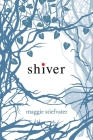
Win a signed ARC of SHIVER and signed copies of LAMENT

If you liked my review of SHIVER and want a signed ARC as well as signed copies of LAMENT, head on over to Maggie Stiefvater's blog and check out the contest she's holding. But hurry, the deadline to enter is this Friday 5/15/09.

And for the record, the ARC of SHIVER Maggie saw for sale on E-Bay is not mine. I'm holding onto mine FOREVER people, so there. Plus, the practice of selling ARCs is appalling!


Shiver by Maggie Stiefvater


Shiver by Maggie Stiefvater
(Blog, Website, Facebook)

Last year, when I read Maggie Stiefvater's first young adult novel, Lament, The Faerie Queen's Deception, I wrote in my review of the book, "Maggie Stiefvater's writing is absolutely beautiful and lyrical. As you're reading, the great care she took into developing characters, adding subtle details here and there, building suspense, emotion, and passion is evident. For those of you who appreciate the beauty and craftsmanship of the written word, you'll find yourselves consuming each passage with delight."

Well, the same rings true with her newest book Shiver, due out in August. The book tells the story from the alternating points of view of two characters. Grace has been watching the wolves outside her Mercy Falls, Minnesota home every winter. She is drawn to one in particular that has stunning yellow eyes, and she's certain that it is the same wolf who saved her from a pack of wolves who attacked her when she was a young girl.

Sam leads two lives. In the spring and summer, he's human, but when the cooler temperatures of autumn descend upon him, it's not long before he turns into a wolf for the winter. The problem with being a werewolf is that the longer you're a wolf, the less time you spend in your human form until one spring, you don't change back and are forever a part of the wolf world.

When Grace meets Sam, one look at his yellow eyes makes her certain that he's her wolf. They are drawn to each other and it doesn't take them long to realize that they've been in love for years as impossible as it may seem. As the temperatures get cooler, Sam and Grace struggle to keep him human, but the bitter cold and other obstacles threaten to take him away from her forever.

What I love about Maggie Stiefvater's writing, especially in Shiver, is that it's completely seamless: the transitions between the two main characters' points of view and the way that she brings werewolves into what seems like a perfectly normal world. I'm one of those people who rarely reads chapter titles or headings because I find them distracting, and not once did I have to glance up at the beginning of a chapter to see who was speaking. Sam and Grace have their own distinct voices and characteristics, but the switch from character to character is not jarring the way I've seen it in a lot of other books. And the coolest thing? Grace and Sam each have their own strengths and complement each other well. I love to see strong female characters in books for teens, and Grace is definitely smart and strong and can take care of herself.

But what I love the most about Ms. Stiefvater's writing is her ability to depict chemistry between two characters--first with Dee and Luke in Lament and now with Sam and Grace. She's masterful at showing and not telling: glances, touches, dialogue, and thoughts all create a completely believable love between a girl and a werewolf.

Shiver is a perfectly executed book, and I continue to be impressed with Maggie Stiefvater's writing. I can't believe I have to wait until 2010 to read Linger, the next book in the series. Luckily, Ballad, the sequel to Lament, will be released this September, so I'll at least get my Maggie fix in the fall.

More info about Shiver:
  • Reading level: Young Adult
  • Hardcover: 400 pages
  • Publisher: Scholastic Press (August 1, 2009)
  • ISBN-10: 0545123267
  • ISBN-13: 978-054512326
  • Review Source: Advanced Reader Copy


Wednesday, May 6, 2009

Before You Were Here, Mi Amor by Samantha R. Vamos, illustrated by Santiago Cohen

Before You Were Here, Mi Amor

In this heartwarming book by Samantha R. Vamos, a mother tells her child how the entire familia prepared for the child's birth. Papi built a rocking chair, abuela painted animals on the child's nursery walls, abuelo planted a tree, and even the family dog participated.

This book is fabulous on so many levels. First, the tender story is something that many families can relate to, and it could inspire parents to tell their children their own personal stories.

Next, it's a perfect book for English- and Spanish-speaking bilingual families. Spanish words are woven throughout the narrative. But even if you don't know Spanish, don't let it deter you from checking out the book. Santiago Cohen's richly colored and detailed illustrations provide context. Plus a glossary in the back lists all of the Spanish words and their English equivalents that are included in the book.

Finally, the story's message is beautiful: an entire family is excited about the arrival of a new child and welcomes the child into the world with anticipation, love, and open arms.

This would also make a great shower gift and a gift for families to share and cherish.

Visit the author's website for activities related to the book, including a questionnaire children can use to write their own story.


ISBN 9780670063017 | 19 Mar 2009 | Viking Children's


Tuesday, May 5, 2009

Chicken Butt by Erica S. Perl, illustrated by Henry Cole


Sometimes you just need a good laugh, and sometimes a funny book is just the ticket. Erica Perl delivers just that with Chicken Butt, a book based on the old joke, "You know what?/ What?/ Chicken Butt!" In this book, silliness abounds as a little boy starts with that question, and continues with "You know why?/ Why?/ Chicken Thigh!" As the boy goes through different chicken body parts, the father gets a little tired of the game, but the boy keeps going and going until the reader reaches a very satisfying ending.

The funniest part of all? An actual chicken who follows the boy home is the centerpiece of Henry Cole's wild and hilarious illustrations. This is the kind of book that would be perfect as a read-aloud to a group of kids or just one, and I have a feeling that kids will ask to read it over and over again.


More info:
  • Publisher: Abrams Books for Young Readers (April 1, 2009)
  • ISBN-10: 0810983257
  • ISBN-13: 978-0810983250
  • Source: Review copy from publisher


Sunday, May 3, 2009

What Can You Do With a Paleta? by Carmen Tafolla, illustrated by Magaly Morales


What Can You Do With a Paleta? by Carmen Tafolla, illustrated by Magaly Morales

Growing up in a very small town, I never heard the familiar tinkle of an ice cream truck pulling into my neighborhood until I was an adult and lived in a bigger city. Now, I can see the joy that sound brings to neighborhood children as they eagerly run up to the truck to take a look at its offerings.

Latin American cultures have their own version of an ice cream truck - the paleta wagon, serving its sweet frozen fruit treats. It seems like the hardest decision is to choose which flavor you want - maybe strawberry, coconut, or mango this time - but Carmen Tafolla's vividly detailed book suggests that once you pick a flavor, you have to decide what to do with it. Do you make a sticky art masterpiece or paint a blue mustache or purple tongue? While those are definitely fun options, the author lets us know that the best thing to do with a paleta is gobble it down.

Tafolla's sensory language and Morales' richly detailed and warm illustrations took me directly to a Mexican barrio on a hot day. I could smell the crisp tacos, hear the music, and even taste a sticky coconut paleta as it dripped down my chin.

This is a book that celebrates a vibrant culture and brings to life the excitement of the paleta wagon rolling through the neighborhood. This is a great book to use in a classroom as well as at home to introduce kids to a culture which they may not know much about. Mexican-American families will treasure this beautiful representation of their culture, and there's even a dual-language version, What Can You Do With a Paleta? / ¿Qué puedes hacer con una paleta?, that bilingual families and kids learning English or Spanish can savor.


More Info:
  • Reading level: Ages 4-8
  • Hardcover: 32 pages
  • Publisher: Tricycle Press (April 2009)
  • Language: English
  • ISBN-10: 1582462216
  • ISBN-13: 978-1582462219
  • Source: Review copy from publisher


Saturday, April 25, 2009

The Miles Between by Mary E. Pearson

Earlier this week my little girl went to bed early, and I thought it was the perfect opportunity to get some much-needed sleep. My nighttime ritual always includes reading, so I picked up my Advanced Reader Copy of Mary E. Pearson’s newest novel that's due out in September, The Miles Between. The last book I read my Ms. Pearson, The Adoration of Jenna Fox, was one of my favorites of last year, and I should have learned my lesson based on the all-nighter I pulled to finish that one. But I didn’t, and my plan to go to bed early ended the minute I opened up the book and read the first chapter of The Miles Between.

It’s October 19th, and teenager Destiny Faraday is beginning what appears to be just another normal day at one of the many boarding schools she’s attended since her parents decided they didn’t want her around when she was a young girl. However, that soon changes when Destiny meets a substitute calculus teacher after breakfast who asks her what she wishes. She says she would just like one fair day and almost immediately happens upon a car with the engine running. Just knowing that she is meant to take the car, she is soon on the road trip of her life with three classmates. Along the way, coincidence, magic, or maybe just pure fate turn it into a truly fair day for all four of the teens, and Destiny is finally able to begin healing from her parent’s abandonment.

First, I want to say how thankful I am for young adult authors like Mary E. Pearson. For the past few months I've been lamenting the poor quality and silliness of nearly every new young adult book I've read this year. Laurie Halse Anderson's Wintergirls and now Pearson's The Miles Between have restored my hope that there are still high-quality, well-developed books being written for teens. It seems though that you have to read a lot of not-so-good stuff before you find the good ones.

Destiny Faraday is a character that I immediately liked from the very beginning of the book. It's apparent that she's been deeply hurt because she tries very hard not to let herself or other people get close to her. But she puts on a front and acts like everything's fine. Her inner dialog is funny and snarky and touching all at the same time. Destiny's classmates are also likable and quirky in their own ways. Even the annoying Mira won me over midway through the book. The road trip is filled with adventure and funny coincidences that I think many teens will enjoy. But along with the funny moments are bittersweet moments and heartbreaking moments.

While I was on the journey with Destiny and her friends, I smiled, I laughed, I snorted, I cried, and was not sad at all that I had missed a couple hours of sleep to take part in the journey. Mary E. Pearson is a true asset to the world of young adult literature, and her beautiful, powerful, and well-thought-0ut writing has made me a true fan.


More Info:
  • Reading level: Young Adult
  • Hardcover: 272 pages
  • Publisher: Henry Holt and Co. (BYR) (September 1, 2009)
  • Language: English
  • ISBN-10: 0805088288
  • ISBN-13: 978-0805088281
  • Source: ARC from publisher


Monday, April 20, 2009

Watch Me Throw the Ball by Mo Willems


I don't how he continues to do it again and again, but Mo Willems' most recent Elephant and Piggie book is a winner. In Watch Me Throw the Ball! , Piggie finds a ball that belongs to her friend Gerald the Elephant who tries to teach Piggie how to throw it. Gerald is determined to show Piggie how to do it the right way to throw a ball, but Piggie wants to do it her way.

As in all of the books in this easy reader series, there are no more than two simple sentences on each page, making it the perfect book for a beginning reader. What I love the most about all of the Elephant and Piggie books is Willems' ability to engage readers and create laugh-out-loud humor through simple sentences and story lines and funny facial expressions.

If you haven't met Gerald and Piggie yet, I urge you to check out this book or one of the others in the series. You won't be disappointed.

What Other Bloggers Are Saying:

A Year of Reading: "But this Elephant and Piggie might be my very favorite--which is amazing to me. Somehow, Willems is keeping these fresh every time. This one is quite hysterical." (read more...)


More Info:
  • Reading level: Ages 4-8
  • Hardcover: 64 pages
  • Publisher: Hyperion Book CH (March 17, 2009)
  • Language: English
  • ISBN-10: 1423113489
  • ISBN-13: 978-1423113485
  • Source: Local library


Thursday, April 16, 2009

Quick Picks

Board Book

Busy Chickens by John Schindel and Steven Holt

Tricycle Press just released the newest installment in their "Busy Animals" series. This board book features beautiful full-color photographs of different types of chickens performing actions like scratching and perching. Not only is this is a great book to teach kids action words, but it's a fun way to see all of the different kinds of chickens out there. We are most impressed with the chickens with mohawks at our house.


Picture Book
Scaredy Squirrel at Night by Mélanie Watt

Our good friend Scaredy Squirrel is back, and you can probably guess by the title what Scaredy Squirrel is afraid of--sleeping of course. After all, you never know what kinds of bad dreams you'll have. Scaredy Squirrel has lots of ways to stay awake, from counting stars to making scrapbooks, but when a horoscope tells him that all of his dreams will come true, he devises a plan in true Scaredy Squirrel form that will surely keep him awake.

Fans of Scaredy Squirrel will not be disappointed, and parents will probably be asked to read it over and over again. Scaredy Squirrel's glow-in-the-dark teeth on the jacket flap add an additional surprise. This is a perfect bedtime story that may just help ease fears of sleeping in your little ones.


Wednesday, April 15, 2009

2009 Read With Kids Challenge

Thanks to Layla at Reading is Fundamental (RIF) for sending me the following information about RIF's 2009 Read With Kids Challenge.

"
US Airways (LCC) has joined with Reading Is Fundamental (RIF) for a second year to celebrate the wonder of reading through the "Fly with US. Read with Kids.®" campaign. It features the online Read with Kids Challenge and supports RIF programs serving children across the nation.

The 2008 Read with Kids Challenge achieved overwhelming success in its first year with more than 16,000 participants logging 3.8 million minutes of reading. This year, the challenge is climbing to new heights with a goal of collectively logging 5 million minutes spent reading with children from April 1-June 30. Participants can register and log their minutes online at www.RIF.org/readwithkids.

Registrants can join individually, or new for this year, create a team of three or more adults. All participants will be entered to win a grand prize drawing of a Walt Disney World®; Resort vacation package from US Airways Vacations, US Airways gift cards, and other great prizes. The team determined by random drawing will win the opportunity to select a featured RIF program, as well as a school in their community, to receive a special children's book collection.

"US Airways is proud to team up with RIF to help children throughout the country discover the joy of reading and provide them with a better foundation for success," said Doug Parker, Chairman and CEO of US Airways.

US Airways—the official airline of RIF—is also encouraging customers, employees, and readers nationwide to support children's literacy by making a donation to RIF. Donors can receive a special edition of Off You Go, Maisy!–a children's book by best-selling author Lucy Cousins-and be eligible to receive up to 5,000 US Airways Dividend Miles.

"RIF is grateful to US Airways for their continued support," said Carol H. Rasco, President and CEO of RIF. "We hope to build on the incredible success of last year's campaign-not only raising awareness of the importance of reading, but encouraging participants to support the children in RIF programs across the country, which provide books to children who otherwise might not have access to them."

US Airways' campaign with RIF, the nation's oldest and largest children and families' literacy nonprofit organization, also provides books and literacy services to children served by RIF programs throughout the country. US Airways' employee volunteer corps, the Do Crew, will participate in RIF book distributions and reading rallies in communities where the airline has a large concentration of employees and passengers: Boston; Charlotte, N.C.; New York City; Philadelphia; Phoenix; Pittsburgh; and Washington, D.C."

View the full press release here.


Monday, April 13, 2009

Obama Reading "Where the Wild Things Are"

I've been on a bit of a blogging hiatus because a project at work is taking almost all of my energy. I'll be back soon with some reviews. In the meantime, check out this article about President Obama reading "Where the Wild Things Are" at today's Easter Egg Roll at The White House.

He even roared. Awesome.


Monday, April 6, 2009

Faith by Maya Ajmera, Magda Nakassis, and Cynthia Pon


When you think of a children's book about different religions, you may expect two-page spreads featuring a different religion on each spread, dull narratives about each religion, and maybe a picture or two. Boring, right?

Luckily, The Global Fund for Children, has brought us a look at different religions in a completely different, engaging, and unique way. Instead of focusing on one religion at a time, Faith, gives us glimpses of different faiths by demonstrating how they're alike.

Two-page spreads feature a different element of faith, such as festivals or food and drink, and full-color pictures with extended captions show children around the world celebrating their faith as it relates to the topic. For example, on the spread about festivals, we see a smiling child in Guatemala peeking out from an Easter mask, children in India celebrating Diwali, children in South Korea celebrating Buddha's birthday, and children in the United States participating in a Native American potlatch ceremony.


What is most compelling about this book is that through very few words, it gives children an overview of the world's faiths and celebrates diversity and religious tolerance. The text is sparse and lets the beautiful pictures do the explaining, so don't expect to find dense explanations of the different faiths. Instead of feeling like a lesson, children will be captivated by the pictures and will likely have many questions about the different children, countries, and religions featured in the book. The back matter includes a brief paragraph about the different elements featured in the book as well as a glossary of different faiths and religious terms. I'd recommend this as a jumping off point for discussion of different religions and can see it being used at both home and in the classroom.

The Global Fund for Children has given us a real treasure with their latest book, Faith. I highly recommend it.
Link

More information:
  • Reading level: Ages 4-8
  • Paperback: 48 pages
  • Publisher: Charlesbridge Publishing (February 2009)
  • ISBN-10: 1580891780
  • ISBN-13: 978-1580891783


Visit Scrub-a-Dub-Tub for more Nonfiction Monday selections.


Friday, April 3, 2009

Stinky: A Toon Book by Eleanor Davis


Stinky (Toon Books) by Eleanor Davis
2009 Theodore Seuss Geisel Honor Book

Review by Erica Moore

Stinky is a monster who lives in a swamp with his pet toad Wartbelly. It's a wonderful place with a bottomless pit, a possum tree, stinky mud, and lots of animal friends. Wonderful that is until a kid named Nick builds a tree house in the swamp. Stinky can't believe a kid would like his swamp because kids like baths, being clean, candy, and apples. Stinky tries to discourage Nick from playing in the swamp by placing Wartbelly in the tree house, hiding Nick's hammer, and trying to scare him. All of these attempts fail, but then one day Nick isn't in the swamp and Stinky feels bad. He might even miss Nick. What is Stinky to do?

This is a nice story about friendship and finding friends in people or monsters that you might not expect. There is a lot of humor, and it's clear where the story is going but that is part of the charm. Stinky is not scary, and Nick might not be a typical kid. Both of them have misconceptions about each other and are also curious about each other. They become friends of course, and in the last panels of the comic, Stinky tries one of Nick's apples and loves it. Stinky immediately offers Nick a pickled onion. The comic ends before Nick takes a bite. I did want to see if he would like it or not.

Image courtesy of RAW Junior, LLC


The art work is wonderful. There is a lot of detail without it feeling cluttered or cramped. I loved the frogs, possums, and rats greeting Stinky as they go about their daily business. There are mini glimpses into the activities of the other swamp inhabitants as you follow Stinky and Nick through the story. The colors are muted and perfect for a swamp or forest. The characters have a round quality to them which creates a soft feeling. There is often only one character speaking per panel, and this makes it easier for beginning readers to know who is speaking and not to be confused about which bubble to read first. The language is simple, and there is enough word repetition for beginning readers.

There is also a nice map on the back end papers of the swamp and its landmarks (another example of the great details in this book). This is a nice jumping off place to create a map of your neighborhood, park, or some other special place. Kids also might have fun remembering when they met a friend for the first time.

Toon Books have been very successful in publishing high interest and quality comics for beginning readers. Stinky has appeal for both boys and girls. I look forward to more comics from Eleanor Davis.

See more sample pages, and download a lesson plan and activity sheet at the Toon Books Website.


More Info:
Publisher: Toon Books, RAW Junior LLC ( 2008)
Age ranage: 4-8, grades, K-2
ISBN 13: 978-0-97799238-4-5
ISBN 10: 0-9799238-4-0
Source: Review copy from publisher


Monday, March 30, 2009

Ocean Wide, Ocean Deep by Susan Lendroth, illustrated by Raúl Allén


Ocean Wide, Ocean Deep by Susan Lendroth, illustrated by Raúl Allén

Review by Janssen (Everyday Reading)

This book is just gorgeous. It tells in verse the story of a little girl growing up in colonial Cape Cod, while her father goes off to sea on the China trade for a year. As the seasons pass and her father misses major events like her little brother learning to walk, she worries about him and imagines the adventures he's having on the other side of the world, eagerly anticipating the day he'll come home to his little family.

The illustrations are done in pencil and watercolors, with a amazing mixture of strong colors and soft lines.

I love the last page, with a picture of their little wooden house by the sea, with stormy clouds hanging over it all:

"Oh, ocean wide, ocean deep,
hush, my family's gone to sleep.
Our Papa's tucked up snug inside -
you kept him safe, oh, ocean wide."

I think books written in verse can sometimes be a little cheesy, but this one is perfectly done. I think the combination of lovely, quiet illustrations and calm text makes this a perfect bedtime story for young children or a beautiful book to share with family and friends. You could use this book to talk about seasons, about traveling parents, about historic New England, or about sailing and boats. Or you could just love it for no reason other than it's a truly beautiful book.


More Info:
  • Reading level: Ages 4-8
  • Hardcover: 30 pages
  • Publisher: Tricycle Press (August 2008)
  • Language: English
  • ISBN-10: 1582462321
  • ISBN-13: 978-1582462325
  • Source: Review copy from publisher


Author Interview: Janet Halfmann

Today, I am honored to bring you an interview with author Janet Halfmann. Janet is the author of numerous children's fiction and nonfiction books.

Two of her recent books have won the following awards:
Seven Miles to Freedom: The Robert Smalls Story (my review)
Starred Review: Kirkus Reviews
Honor Book: Society of School Librarians International
Editor's Favorites: The Bloomsbury Review
Land of Enchantment Masterlist: New Mexico Library Association


Little Skink's Tail (my review)
Mom's Choice Awards: Best Children's Book for 2009 (1 of 3), plus Gold Medals: Educators' Choice & Animal Kingdom categories
2009 Teachers' Choice Award: Learning Magazine
2008 Best Overall Book and Best Picture Book: Florida Publishers Association


Janet was kind enough to take time out of her amazingly busy schedule to answer some of my questions about her books, her writing, and reading with kids.

In the past, a lot of nonfiction was boring and dry, but now there are tons of nonfiction books like yours that engage and entertain children. Even today, some teachers and parents do not regard nonfiction as "real reading." Why do you think nonfiction is important?

Janet Halfmann (JH): Well, for starters, I think it’s important because there is so much about the world that can only be shared through nonfiction. Nonfiction tells the true stories of the people, animals, events, etc., that make up the world around us. Nonfiction answers the thousands of questions that children have about who, what, when, where, and why. This type of reading helps children understand and appreciate their world. It builds up a store of information that they can draw on in their writing, conversation, and other aspects of their lives.

Nonfiction is also important in helping children develop their interests, from sharks to outer space. Sometimes reluctant readers can be enticed to read by providing nonfiction books about topics they enjoy. Without nonfiction, some children won’t read at all and others will read less.

Nonfiction also helps prepare children for reading in other subjects, from history to math, and for reading outside of school, where most reading is nonfiction—websites, directions for playing games, recipes, magazines.


What is your favorite part of the writing process?
JH: Research is definitely one of my favorite parts of writing. I do a tremendous amount of research for both my fiction and nonfiction. I love learning new things and finding the telling details that make a person or animal come alive for the reader or listener. I especially enjoy finding and reading primary sources. For Seven Miles to Freedom: The Robert Smalls Story, I was lucky to find letters, speeches, interviews, and newspaper accounts of the time. When researching an animal, I love reading accounts of scientists in the field observing the creature firsthand.

Another favorite part of writing is doing the fine-tuning once I’ve got the story fleshed out. I love finding just the right rhythm for a sentence or just the right word. In writing Little Skink’s Tail, one of my favorite parts was thinking of the fun things Little Skink would say about each tail, such as too puffy-fluffy or too stickly prickly, and I find that readers and listeners love and repeat those words.


Do you prefer to write fiction or nonfiction?
JH: I think I like both equally well. I like the freedom that comes with writing fiction—being able to conjure things up in my imagination, and not having to check and double-check the facts, or dig and dig to figure out what the facts really are.

But I like the concreteness of nonfiction—to have a story that is already there but just needs to be researched and shaped by me.

Even my fiction tends to have a nonfiction component. For example, in Little Skink’s Tail, the little lizard’s daydreaming about other animal tails is fiction, but the skink’s habitat, the animals’ uses of their tails, the predator-prey relationships, etc., are all scientifically accurate.

On the other hand, some reviewers have said my recent nonfiction picture book, Seven Miles to Freedom: The Robert Smalls Story, which adheres carefully to the facts, reads with all the suspense of fiction.


What do you like the most about writing for children?
JH: I like everything about it. I can’t imagine doing anything else. I especially like the feeling of a sense of wonder that I get in writing for children. I love the experience of making a person or animal come to life on the page.


What do you like the least about writing for children?
JH: Sometimes it’s difficult to give up a word that seems just right but is not appropriate for the age of the child for whom I’m writing. I also do not like the business side of writing nearly as much as the writing itself.


Parents often ask how they can turn their reluctant readers into lifelong readers. Do you have any tips?

JH: Here are my 10 tips:

1. Read to your child from the time he/she is very young, and make it an enjoyable time. Make reading a daily routine, such as at bedtime. Reading is a wonderful way to bond with a child and creates memories that last a lifetime. My grown children still treasure their favorite childhood books!

2. Have lots of books, magazines, newspapers, and other reading material available. Have a special place for the child to keep his/her own books.

3. Go to the library often and let your child pick out the books he/she wants. Also help your child find books related to his/her interests or activities, and books of an appropriate reading level.

4. Attend story times at the library and other places.

5. Include your child in your everyday reading—recipes while cooking, road signs, etc.

6. Take books along when you travel and for whenever you have to wait.

7. Read yourself. Kids will do what you do.

8. Have paper, pencils, and crayons on hand to give your child opportunities to write and draw.

9. Talk to your child and listen to what he/she has to say.

10. And above all, always make reading enjoyable. Never use reading as a punishment.


Those are some wonderful tips! What were some of your favorite books and/or authors growing up?
JH: I grew up in a home with very few books, and the only library was a very tiny one in our school. It had mostly books about saints—and I think I read them all. My favorite book of all was a story collection that my parents used in school—my favorite story was Rumpelstiltskin.


What were your children's favorite books when they were growing up?
JH: When my kids were young, we read every day, went to the library at least once a week, and always had lots of books in the house. All of my children are avid readers today. Some of their favorite childhood books are: Where the Wild Things Are, Harry the Dirty Dog, Curious George, Flat Stanley, Harold and the Purple Crayon, Horton Hatches an Egg, The Lorax, The Story of Ferdinand, the Beatrix Potter books, Harriet the Spy, and The Chronicles of Narnia.


Do you read with your grandchildren? If so, what are some of their favorite books?
JH: Of course, my grandchildren love Little Skink’s Tail and other books by Grandma. My five-year-old grandson especially likes books about sharks. He also likes There Is a Bird on Your Head, Five Little Monkeys Sitting in a Tree, and Pinocchio. My two-year-old grandson practically inhales books. We read stacks again and again every time he visits. Some favorites are Five Little Monkeys Sitting in a Tree, The Hungry Caterpillar, Purrrrr, Peekaboo Blueberry and other books with flaps, Five Little Stars and other books with music or sounds.


What can we expect to see from you next?
JH: My eighth and ninth nonfiction picture books will release soon from Soundprints, which publishes nature books in association with the Smithsonian Institution. Narwhal: Unicorn of the Sea is about the adventures of a narwhal, an Arctic whale that has a nine-foot-long tooth. Little Black Ant on Park Street features the life of the typical picnic ant. Plush animals and audio also are available with these books, and everything has to be approved by curators at the Smithsonian Institution.
Good Night, Little Sea Otter, a bedtime fiction picture book, will release this fall from Star Bright Books. Star of the Sea, a nonfiction picture book, will come out in 2010 from Henry Holt. I got to see the animals featured in both of these books during a recent visit to Monterey Bay Aquarium in California. Was I excited!

I also have two books coming out from Orchard House Press that my daughter is illustrating. She didn’t plan to illustrate books, but decided to submit a sample drawing after Orchard House Press contracted two of my books and was looking for illustrators. The publisher loved her work and now my daughter is hard at work drawing nights and weekends and feeling quite nervous about the whole thing.

The first title she is illustrating is Bewitching the Chickadees, a picture book about a young girl, her grandma, a special bird feeder, and chickadees. The second book, Sunflower Princess, is a chapter book for ages 7-9. Release dates have not yet been set.


Wow! You've been busy, and I think it's great that your daughter is illustrating two of your books. Thank you so much, Janet, for taking the time to answer the questions, and I look forward to reading your books when they come out!

Read more about Janet and her books on her JacketFlap page.